Define goals, objectives, and key results by involving:
– Team: – Partners: – Volunteers: – Communities involved in developing the “Construyendo” strategy.
From ANALYSIS OF " " GEOGRAPHY
Evaluate using indices:
1. Multidimensional Poverty -2. Vulnerability 3. Social Cohesion 4. Safety 5. Cross-sectoral feasibility for developing the community plan.
Where we identify COMMUNITY NEEDS: family and social
Identify through a Needs Assessment (EDN) based on the following categories:
– Poverty – Overcrowding – Social Disadvantage – Marginalization – Communityto develop a strategy for community action.
To IMPLEMENT THE COMMUNITY INITIATIVE "Building"
Engage beneficiaries, partners, and volunteers through their commitments to the project’s implementation in order to achieve our mission and vision.
1. Community engagement 2. Volunteer days 3. Economic impact 4. Job creation (temporary) 5. Fostering community solidarity
MAKING A POSITIVE IMPACT on the development of communities, volunteers, and partners.
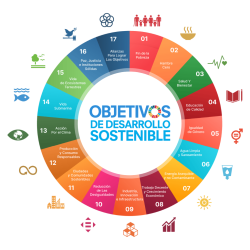
1. Measure impact through five Sustainable Development Goals (SDGs):
Goal 1: End Poverty Goal 3: Good Health and Well-being Goal 4: Quality Education Goal 11: Sustainable Cities and Communities Goal 16: Peace, Justice, and Strong Institutions
2. Measuring the Impact on VOLUNTEERS:
Belonging
Social Responsibility
Meaning of Life
Social Integration
Significance
SDG IMPACT 2024
Our social initiatives aim to bring about comprehensive change in the communities where we work, using a methodology that is grounded in solid guiding principles, flexible in its processes, and transparent to all involved. Our PANEL methodology is rooted in a culture of mutual aid, solidarity, and social synergy.
Target: 1.4By 2030, ensure that everyone has equal rights to economic resources, as well as access to basic services and property.
82% of families see an improvement in their financial situation.
100% were able to regularize their property status.
88% were released from a situation of housing poverty.
100% of the families were provided with housing.
89% report a improvement in their quality of life.
83% have net worth and are better off financially.
83% envisages a better future when they own their own home.
0
HOUSING
Target: 3.4By 2030, reduce mortality by one-third through preventionand treatment.
54% of families say they have greater peace of mind and well-being.
57% reports feeling better health-wise.
35% of families report fewer chronic illnesses.
0
BENEFICIARIES
Goal: 4.aBuild and adapt educational facilities that take into account the needs of children and people with disabilities.
31 classrooms in schools.
270 more students in the school system.
90 students reintegrated into the education system.
34% in reduction in school absenteeism.
43% of teachers perceive greater student motivation to continue their studies.
40% of teachers are motivated to teach.
31% Of the students perceive better classroom dynamics.
38% Of the families see that teachers are motivated.
0
EDUCATIONAL SPACES
Target: 11.1By 2030, ensureaccess to adequate housing and basic services for all.
$4,869,712.77 pesos in economic benefits for local suppliers that energize and develop the community.
98% of families no longer no longer live in overcrowded conditions.
90% moved into homes made of high-quality materials.
$0
ECONOMIC SPILLOVER
Target: 16.7Ensure the adoption at all levels of inclusive, participatory, and representative decision-making that meet people’s needs.
70% of families report a high level of community support.
79% have more trust and closeness with their neighbors.
78% of families participated in the change and improvement of their community.
81% of families receive Building as having great valueto the community.
0
VOLUNTEERS
Building
Volunteering
Volunteer
Would you like to join us? Contact us for more information